
Content note: this article discusses sexual violence against LGBTQ+ people.
Sexual violence affects every demographic and every community, including the LGBTQ+ community. Because LGBTQ+ people face higher rates of poverty, stigma and marginalisation, they also face higher rates of hate-motivated violence.
One form of this violence is corrective rape, sometimes carried out in the name of conversion therapy. More often than not, it happens with the consent of the person’s parents.
What is corrective rape?
Corrective rape is the term for rape arranged against a gay, transgender or queer person with the aim of changing their sexuality or gender identity. It is an act of extreme cruelty.
The survivor endures all the harm of rape, along with the pain of knowing that their own family members are behind it. The aim is to “punish” what the family sees as “abnormal” behaviour.
Does corrective rape happen in India?
Yes, it does. Unfortunately, it often goes unreported, because it is usually family members who sanction it.
For LGBTQ+ survivors, their identities, and the discrimination they face because of them, often make them hesitant to seek help from the police, hospitals, shelters or rape crisis centres: the very services that are meant to help them. Admitting to yourself and others that your family is responsible for this is deeply traumatising and scarring.
Does corrective rape work? The impact on survivors
Corrective rape does not “cure” anything, because there is nothing to cure. It does not change a person’s sexual orientation. What it does is far worse.
Corrective rape is a violation of bodily autonomy and sexual identity. It can lead to a series of negative thoughts and emotions and set a survivor on a downward spiral that can feel impossible to recover from. Survivors may feel fearful, angry or depressed, and may experience rape trauma syndrome or post-traumatic stress disorder (PTSD). Being subjected to such a crime is bound to have a long-lasting effect.
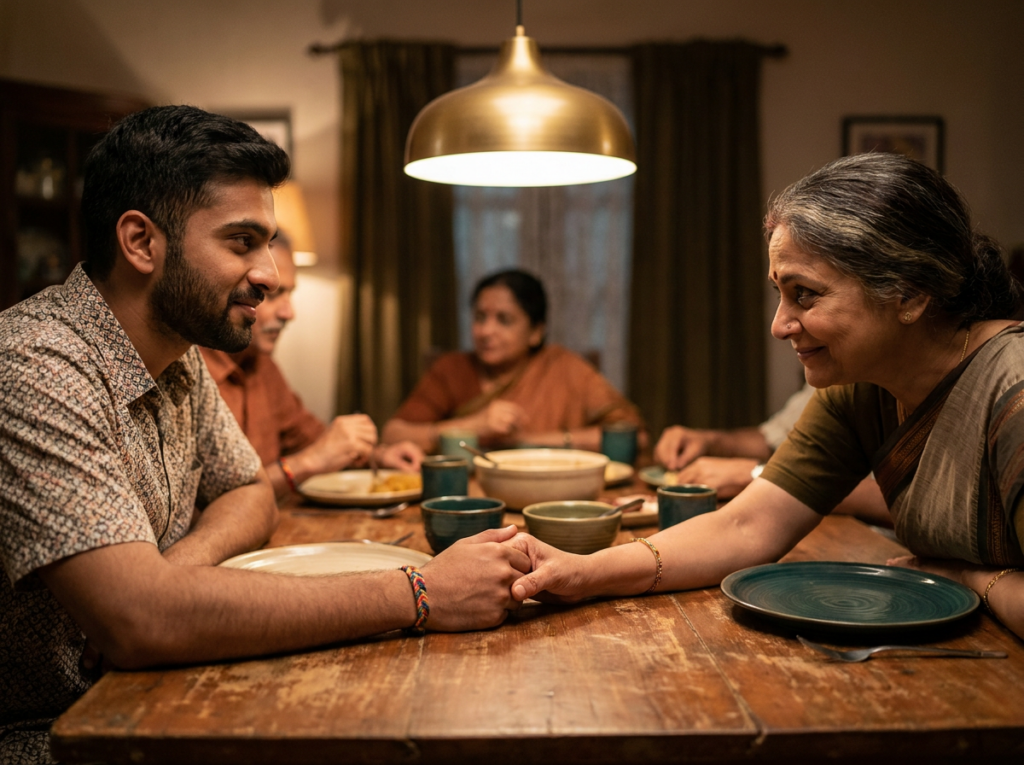
If you are struggling to accept your child’s sexuality
Parents who are struggling to accept their child’s sexual orientation can choose therapy and counselling instead. Both individual and family therapy can help you understand your child’s point of view, help them understand yours, and begin to mend the relationship between you.
If you have experienced corrective rape, there is hope
If you have experienced corrective rape, you should know that you are not alone. Many people in India and other parts of the world have been through similar experiences. It may feel impossible to move on, but there is hope.
Do not be afraid to reach out to a therapist or counsellor. You deserve a non-judgemental space where you can speak freely, without feeling embarrassed, and get the help and guidance you need to heal.
Getting support
Trijog’s therapists offer a safe, confidential and non-judgemental space to talk, at your own pace. You can book a session with a Trijog therapist or call the Trijog helpline on 1800 202 7180.
If you or someone you know is in immediate danger, call 112. For free, confidential support any time, call Tele-MANAS on 14416.