Did every day start to feel more unpredictable once the pandemic began? We used to be able to plan and predict our days as soon as we woke up. The uncertainty and anxiety about the future that came with the pandemic put the focus on mental health alongside physical health, and made many of us question our own state of mind.
Why more people are turning to therapy
The pandemic tested everyone’s resilience. Even when nothing is substantially wrong in someone’s life, they sometimes just need direction, and counselling has proved to be a very helpful way to deal with these circumstances.
The need for therapy has grown as more households go through mental health difficulties such as anxiety, depression and burnout. As people realise how important their mental and emotional well-being is, the stigma around therapy and mental health is slowly starting to fade.
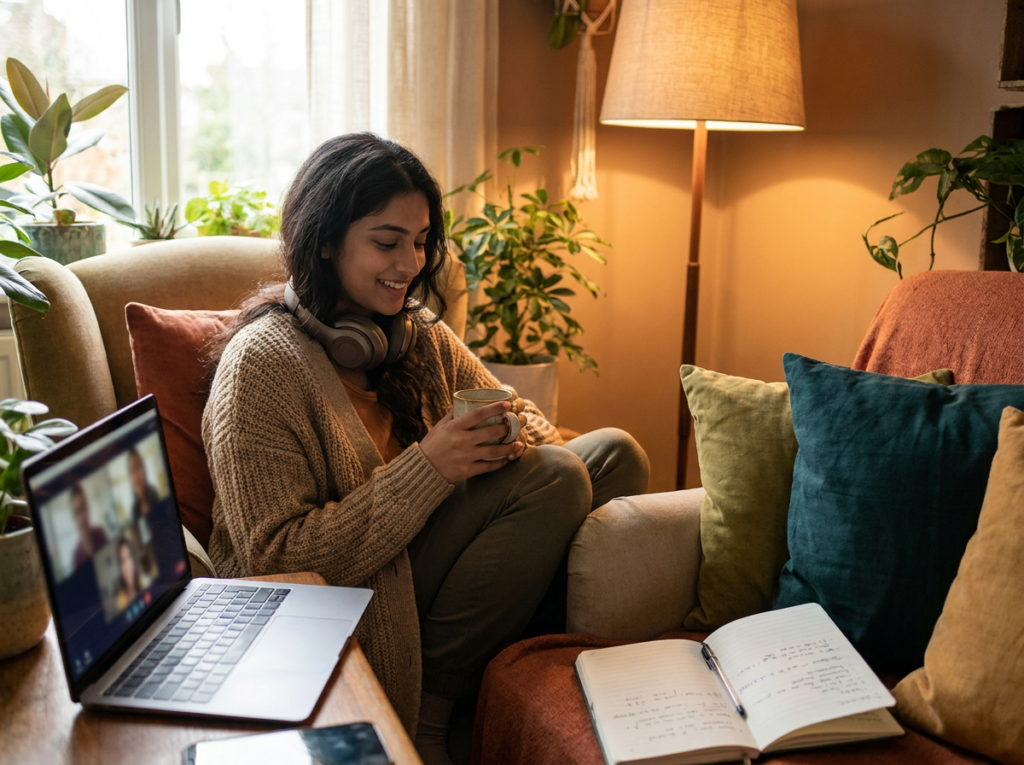
During the pandemic, our communication was largely limited to smartphones, tablets, computers and the internet. With little in-person contact, many people opened up to the idea of online counselling and therapy, but many still question how effective it is compared with in-person therapy.
What is online therapy?
Online therapy means psychotherapy or counselling delivered over the internet. Unlike in-person therapy, it lets you talk to a qualified therapist or counsellor from any device with an internet connection, such as a computer, tablet or smartphone. Just as with in-person counselling, it is based on mainstream, evidence-based psychological treatment approaches.
Is online therapy as effective as in-person therapy?
A lot of recent research suggests that online therapy is just as effective as in-person therapy. Research published in March 2020 in the Journal of Affective Disorders looked at differences in interaction quality between face-to-face and telephone counselling. It found minimal difference in how effective the therapy relationship was, how much clients disclosed, or levels of empathy, attentiveness and engagement.
According to the evidence, anxiety, stress and depression can all be treated online. Research also shows that online therapy, including email and video conferencing, can lead to client satisfaction, with both the therapy and the relationship with the therapist, comparable to face-to-face therapy.
Benefits of online therapy
Easy to access
Online counselling makes mental health care available to people in rural or remote areas, where there may be few or no mental health practices and no other way to get therapy.
With online therapy, you can begin a session or stay in touch with your therapist from anywhere you have internet access. It also saves commuting time, especially for people who would otherwise travel long distances.
Convenient and cost-effective
Online therapy is usually cheaper than in-person therapy because it reaches you in the comfort of your own home. Therapists who work only online are likely to have lower overheads, such as office rent, so they can often offer more affordable options for people without health insurance.
Being in a familiar setting can also make it easier to be open and vulnerable.
More approachable
If you feel nervous about going to an in-person session, or you don’t have much time, online counselling can work best. According to studies, internet therapy takes 7.8 times less time than face-to-face therapy, which means therapists may be able to treat more people online.
You don’t have to worry about seeing familiar faces in a waiting room, and it can feel easier to share private information online. People with anxiety, particularly social anxiety, are more likely to seek help from an online therapist.
Confidentiality is maintained
As with any counselling session, the therapist makes sure your confidentiality is protected throughout (read more about how confidentiality works in therapy in India). Online therapy also lets you choose from a bigger pool of counsellors, so you can find one who suits your needs, and stay anonymous if you wish.
Is online therapy right for you?
Online therapy can be a good, convenient way to get mental health support. Whether it is right for you depends on your condition and how severe your symptoms are.
If you’d like to try it, do some research before choosing a provider. It can take time to find the right online therapist, but it is worth the effort.
“Sometimes the smallest step in the right direction ends up being the biggest step of your life. Tiptoe if you must, but take a step.” – Naeem Callaway
FAQs
Does online therapy work for anxiety and depression?
According to the evidence, anxiety, stress and depression can all be treated effectively online.
Is online therapy cheaper than in-person therapy?
Usually, yes. Online therapists often have lower overheads, such as office rent, so they can offer more affordable options.
Getting started with therapy
If you’re ready to take that step, explore online therapy with Trijog, book a session or call the Trijog helpline on 1800 202 7180 to find the right fit.